DonateMembershipVisit Heritage
  • Tūrangawaewae
    Places
  • Tira Māori
    Māori Heritage
  • Poutairangahia
    Archaeology
  • Rauemi
    Resources
  • Mō Tātou
    About Us
  • New Zealand Heritage List
  • Nominate and submit
  • Explore the List
  • National Historic Landmarks
  • Plaques
  • Rainbow List Project
  • Lost heritage
  • Visit Heritage
  • Our properties
  • Turnbull House Project
  • Collections
  • Shop
  • Tohu Whenua
  • Tira Māori
  • Conserving Māori heritage
  • Marae built heritage
  • Māori heritage on the List
  • Hinemihi—Te Hokinga Mai
  • What is archaeology?
  • Is there a site on my property?
  • What are my legal requirements?
  • Affecting an archaeological site
  • Declaring an archaeological site
  • Archaeology FAQs
  • Archaeology Digital Library
  • Archaeology guidelines and templates
  • Resources
  • Funding
  • Publications
  • Sustainable management guides
  • Disaster recovery
  • Podcasts & digital resources
  • Education Hub
  • Conservation plans
  • About
  • Board
  • Māori Heritage Council
  • Senior Staff
  • Offices
  • Contact us
  • Careers
  • Covenants
  • Fast-track
  • Corporate documents
  • Currently consulting on
  • Our submissions
  • News
  • Covid-19 response
Quick links
Rārangi Kōrero | The List
Explore the List
National Historic Landmarks
Ngā Manawhenua o Aotearoa me ōna Kōrero Tūturu
Quick links
Tapuwae
A Vision for Places of Māori Heritage
Funding for Māori Heritage
Resources
Quick links
Archaeological Authority Portal
Applying for an archaeological authority
Archaeology FAQs
Browse the most frequently asked questions about archaeological authorities and the archaeological process.
Quick links
Quick links
News
News Keep up to date with Heritage New Zealand Pouhere Taonga
Membership
Membership Find out more and sign up today
DonateMembershipVisit Heritage
  • Tūrangawaewae
    Places
  • Tira Māori
    Māori Heritage
  • Poutairangahia
    Archaeology
  • Rauemi
    Resources
  • Mō Tātou
    About Us
  • New Zealand Heritage List
  • Nominate and submit
  • Explore the List
  • National Historic Landmarks
  • Plaques
  • Rainbow List Project
  • Lost heritage
  • Visit Heritage
  • Our properties
  • Turnbull House Project
  • Collections
  • Shop
  • Tohu Whenua
  • Tira Māori
  • Conserving Māori heritage
  • Marae built heritage
  • Māori heritage on the List
  • Hinemihi—Te Hokinga Mai
  • What is archaeology?
  • Is there a site on my property?
  • What are my legal requirements?
  • Affecting an archaeological site
  • Declaring an archaeological site
  • Archaeology FAQs
  • Archaeology Digital Library
  • Archaeology guidelines and templates
  • Resources
  • Funding
  • Publications
  • Sustainable management guides
  • Disaster recovery
  • Podcasts & digital resources
  • Education Hub
  • Conservation plans
  • About
  • Board
  • Māori Heritage Council
  • Senior Staff
  • Offices
  • Contact us
  • Careers
  • Covenants
  • Fast-track
  • Corporate documents
  • Currently consulting on
  • Our submissions
  • News
  • Covid-19 response
Quick links
Rārangi Kōrero | The List
Explore the List
National Historic Landmarks
Ngā Manawhenua o Aotearoa me ōna Kōrero Tūturu
Quick links
Tapuwae
A Vision for Places of Māori Heritage
Funding for Māori Heritage
Resources
Quick links
Archaeological Authority Portal
Applying for an archaeological authority
Archaeology FAQs
Browse the most frequently asked questions about archaeological authorities and the archaeological process.
Quick links
Quick links
News
News Keep up to date with Heritage New Zealand Pouhere Taonga
Membership
Membership Find out more and sign up today
  • Places
  • Nominate and submit
  • National Historic Landmarks
  • Places
  • Nominate and submit
  • National Historic Landmarks
  • Tira Māori
  • Conserving Māori heritage
  • Marae built heritage
  • Tira Māori
  • Conserving Māori heritage
  • Marae built heritage
  • Archaeological authorities
  • Archaeology Digital Library
  • Archaeological authorities
  • Archaeology Digital Library
  • All resources
  • Publications
  • Funding
  • All resources
  • Publications
  • Funding
  • FAQs
  • FAQs
Follow us on:
Places
  • Places
  • Nominate and submit
  • National Historic Landmarks
Tira Māori
  • Tira Māori
  • Conserving Māori heritage
  • Marae built heritage
Archaeology
  • Archaeological authorities
  • Archaeology Digital Library
Resources
  • All resources
  • Publications
  • Funding
FAQs
  • FAQs
Follow us on
HomePrivacyTerms and conditionsAbout this site
© Heritage New Zealand Pouhere Taonga 2026.
 
Makohine Railway Viaduct

Ironworks Road, OHINGAITI

Private

Historic Place Category 1

List No. 32

Quick links:
List GalleryLocationDetails
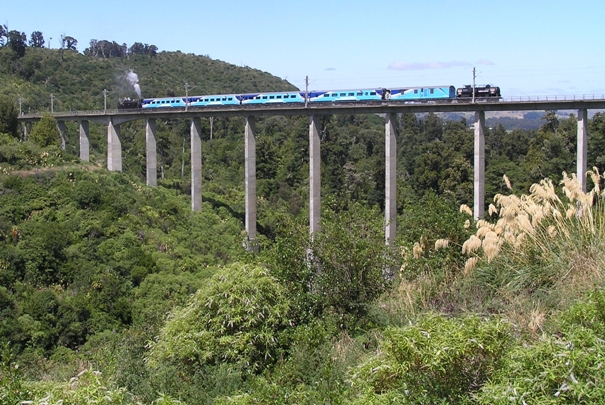
The Makohine Railway Viaduct, completed in 1902, was an impressive engineering milestone in the construction of the North Island Main Trunk line. The construction of a railway line connecting Wellington with Auckland was first proposed by the Vogel government in 1870; but it was another decade before relations between the Crown and Waikato Maori had improved sufficiently for planning for the line to proceed. By 1884 the House of Representatives approved the route of the railway and the first sods were turned on 15 April 1885. Work began at each end of the Island with the intention of meeting in the middle. Progress was slow, subject to the difficulties of the terrain and the vagaries of changing governments. By 1887 the line had progressed as far south as Te Kuiti and as far north as Marton. The remaining section to be completed crossed difficult terrain which necessitated the construction of a number of tunnels and viaducts.

Plans for the viaduct at Makohine, begun in 1893, were prepared by the resident engineer Public Works Department, Peter Seton Hay (1852/53-1907). Hay also designed the Mangaweka, Hapuawhenua, Taonui, Manganui-a-te-ao and Makatote viaducts. Unable to obtain a satisfactorily low tender for the structure it was decided that the viaduct would be built primarily by the Public Works Department. Work was well under way by 1897, but the weather and delays in the delivery of the prefabricated steel from England hampered progress. The viaduct was finished in June 1902 and was officially opened by Minister for Public Works, William Hall Jones, in the same month. The last spike was driven on the Main Trunk line at Manganui-a-te-ao on 6 November 1908.

The Makohine Railway Viaduct is a most significant example of New Zealand engineering heritage. At the time of its construction it was the second highest viaduct in New Zealand, and today is still ranked the seventh highest and fourth longest viaduct on the North Island Main Trunk line. Its completion overcame one of the major natural obstacles that stood in the way of what is now the busiest and most important railway line in New Zealand. It was designed by one of the great engineers in the history of the Public Works Department. The viaduct is one of the best-known of all railway structures adjoining State Highway 1 in the North Island.
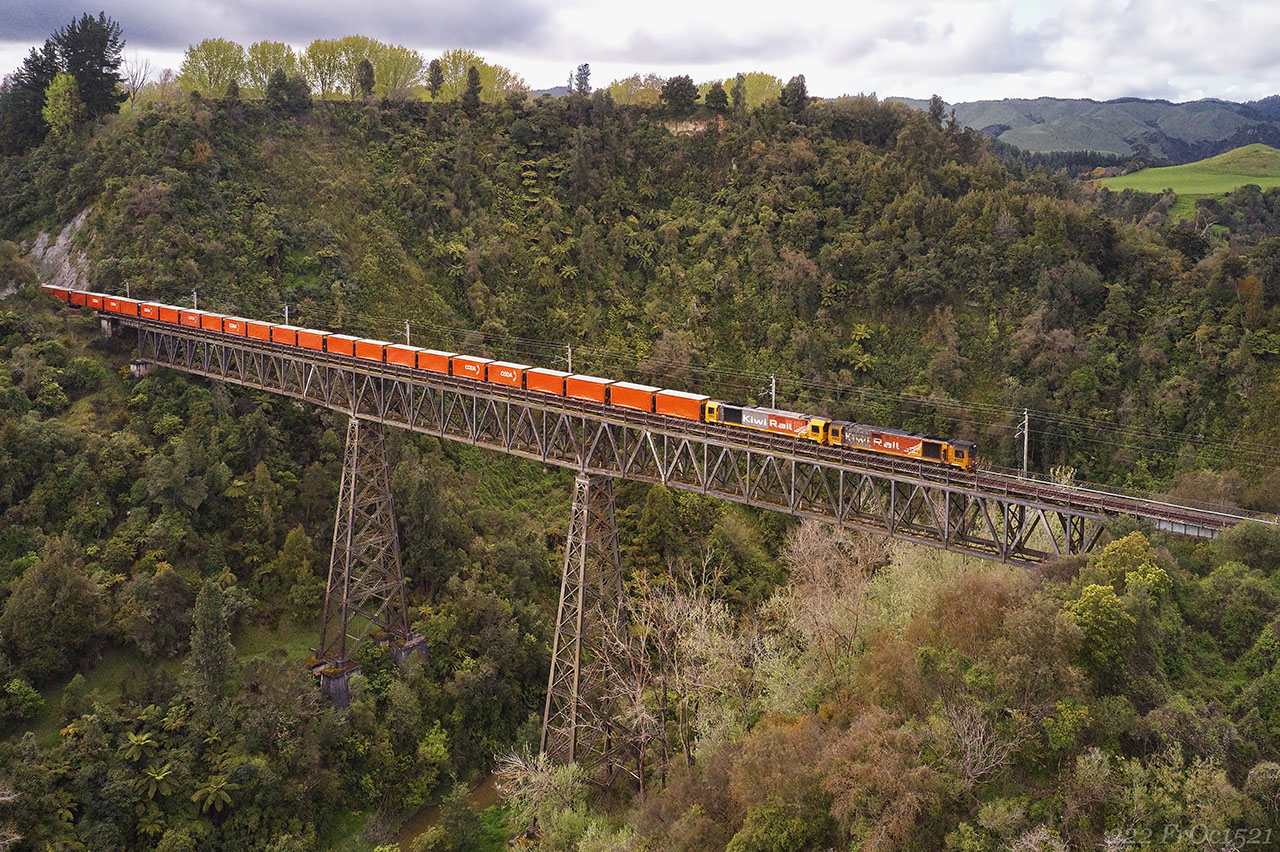
Makohine Railway Viaduct, Ohingaiti. Image courtesy of www.flickr.com | Joe Wallace | 15/10/2021 | Joe Wallace
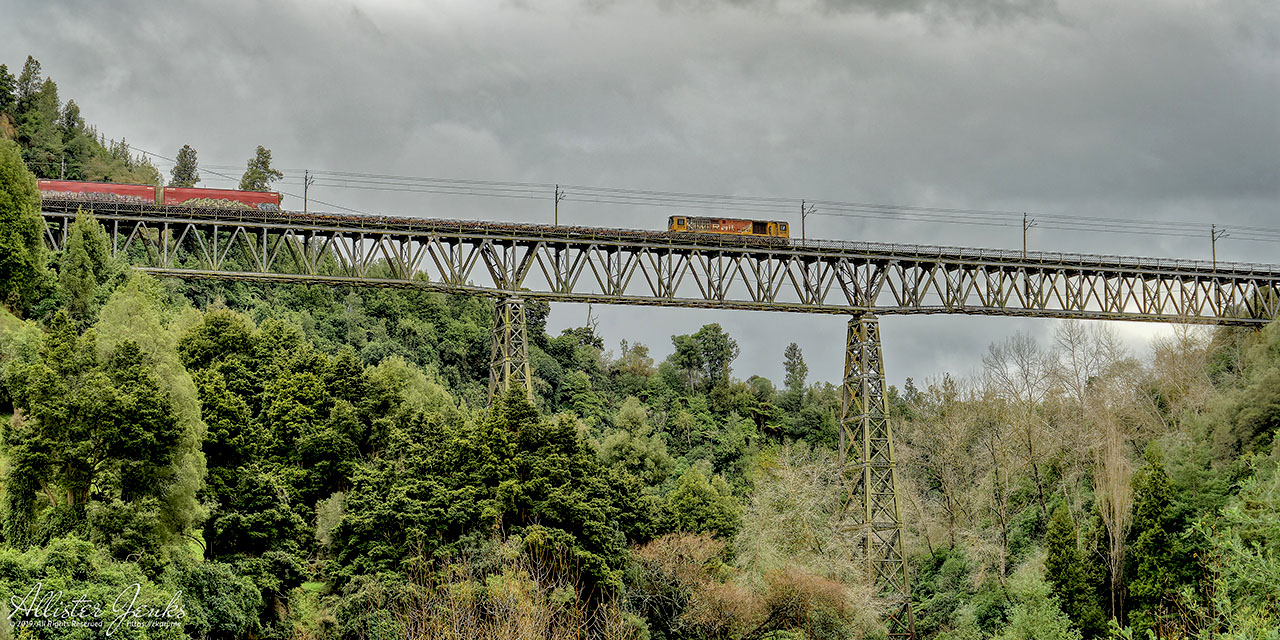
Makohine Railway Viaduct Ohingaiti. CC BY-NC-ND 2.0 Image courtesy of www.flickr.com | zkarj | 07/06/2019 | Allister Jenks
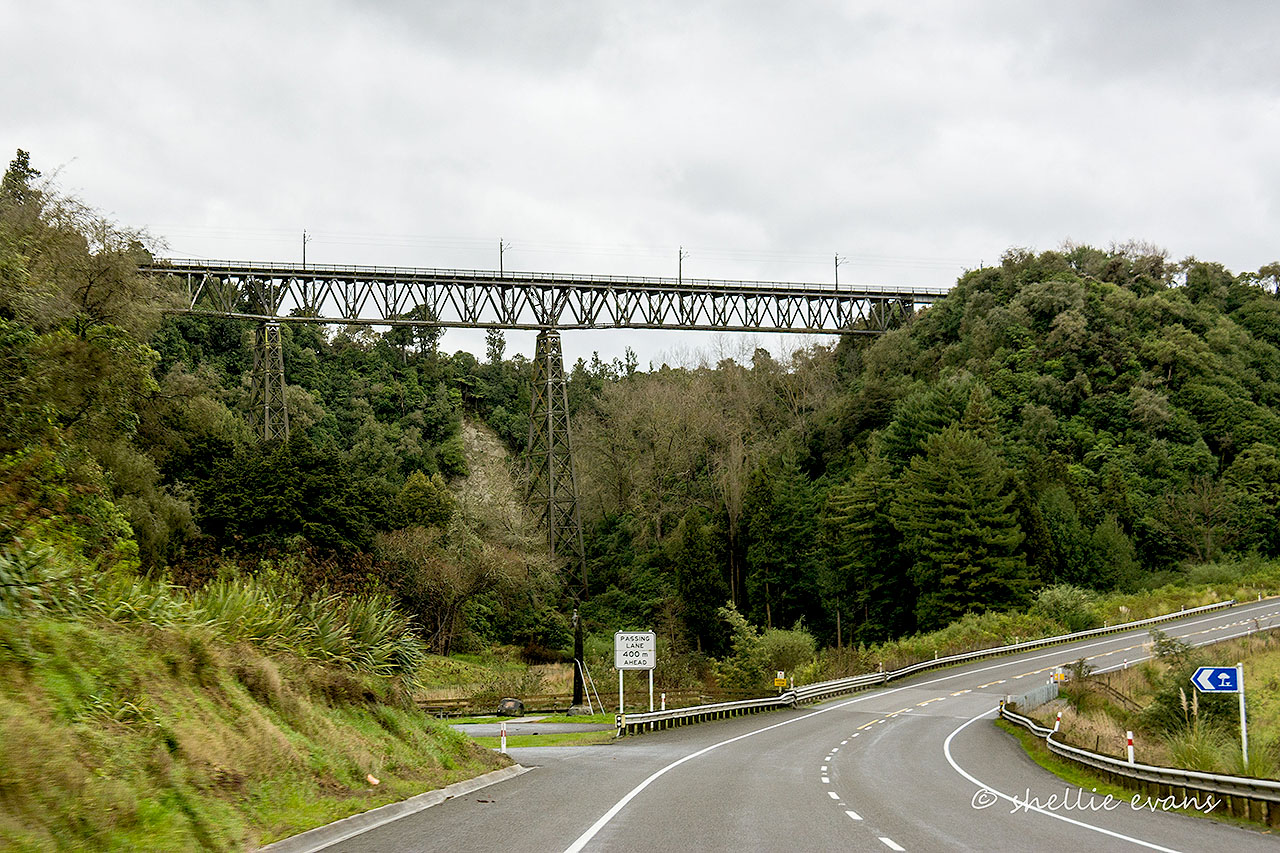
Makohine Railway Viaduct, Ohingaiti. CC BY-NC-ND 2.0 Image courtesy of www.flickr.com | Shellie Evans – flyingkiwigirl | 08/07/2016 | Shellie Evans
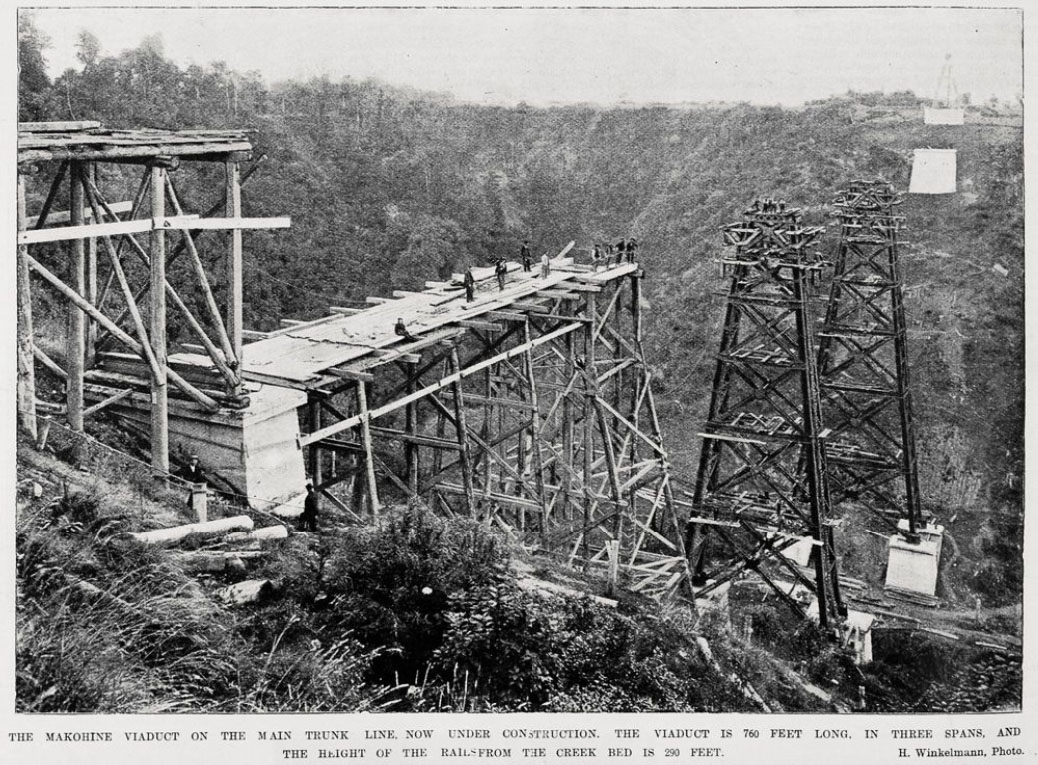
Makohine Railway Viaduct, Ohingaiti. Under construction. Auckland Libraries Heritage Collections AWNS-19010517-06-02 | Auckland Weekly News, 17 May 1901, p.6 | 17/05/1901 | No Known Copyright Restrictions
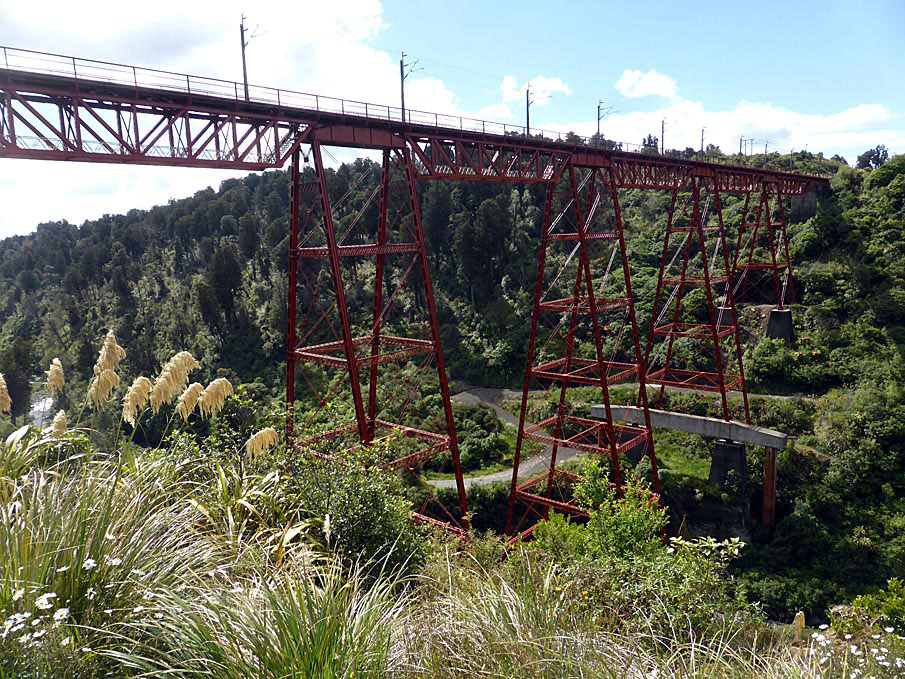
Makohine Railway Viaduct, Ohingaiti. Image courtesy of www.flickr.com | Joe Wallace | 15/10/2021 | Joe Wallace
Makohine Railway Viaduct Ohingaiti. CC BY-NC-ND 2.0 Image courtesy of www.flickr.com | zkarj | 07/06/2019 | Allister Jenks
Makohine Railway Viaduct, Ohingaiti. CC BY-NC-ND 2.0 Image courtesy of www.flickr.com | Shellie Evans – flyingkiwigirl | 08/07/2016 | Shellie Evans
Makohine Railway Viaduct, Ohingaiti. Under construction. Auckland Libraries Heritage Collections AWNS-19010517-06-02 | Auckland Weekly News, 17 May 1901, p.6 | 17/05/1901 | No Known Copyright Restrictions

List Entry Information

Overview

Status
Listed

List Entry Status
Historic Place Category 1

Access
Private/No Public Access

List Number
32

Date Entered
2nd April 1985

Date of Effect
2nd April 1985

City/District Council
Rangitīkei District

Region
Horizons (Manawatū-Whanganui) Region

Legal description

Rway No 44048 LP 1158 Makohine Viaduct NIMT Blk16 Tiriraukawa

Location Description

The viaduct can be viewed from below at the State Highway 1 (SH1) rest stop which abuts the Makohine Reserve.

Detailed List Entry

Construction Professional

Name

Hay, Peter Seton

Type

Engineer

Biography

Peter Seton Hay (1852/1853? - 1907) was born in Glasgow, Scotland, probably in 1852 or 1853, the son of Janet (Jessie) Dalziel and her husband, James Johnston Hay, a journeyman engineer. When Peter was a child the family emigrated to New Zealand, arriving at Port Chalmers on the Storm Cloud in April 1860. Educated in Dunedin, he was the first graduate of the newly established University of Otago, obtaining a BA in 1877 and an MA with first-class honours in mathematics in 1878. In June 1875 on the advice of a university teacher he had joined the Public Works Department as an engineering cadet. After completing his studies he was engaged in railway surveys and construction for the lines from Dunedin to Moeraki and Clinton. In the early 1880s he was employed on Central Otago railway surveys from Rough Ridge to Hawea, in the Cromwell district, and from Balclutha to the Catlins River. Hay's reputation as a brilliant young engineer was established in these Otago days. Stories were told of his prodigious mental calculations when he was working in the field without the usual aids such as logarithm tables. In 1884 Hay was transferred to the head office of the Public Works Department in Wellington. He began his steady progress through the ranks of the department, and two years later was promoted to resident engineer. In 1896 he was promoted to superintending engineer, equivalent to assistant engineer-in-chief. By then the construction of the North Island main trunk rail link was the foremost Public Works Department project. Hay helped plan most of the important railway works of the central North Island section and was responsible for the primary design of the Makohine, Mangaweka, Hapuawhenua, Taonui, Manganui-a-te-ao and Makatote viaducts. By any standards the viaducts were great works of engineering. Much of the credit for their construction must be attributed to Peter Hay. Hay succeeded W. H. Hales as engineer-in-chief of the Public Works Department in 1906, only to die in office on 19 March 1907. He suffered the effects of exposure while inspecting the main trunk railway works near Waiouru, and subsequently died from pleurisy at his home in Wadestown, Wellington. He was aged 54. One of Hay's major achievements was his investigation and report on the proposed Southern Alps rail crossing by the Midland railway in 1903. The scheme recommended by the government's American advisory engineer, Virgil Gay Bogue, required a 3½-mile tunnel and a steep gradient incline track. Hay's scheme, which was ultimately adopted, avoided expensive grading and track work but required a tunnel over five miles long. This tunnel, at Otira, was completed in 1923, long after Hay's death. Equally important was Hay's contribution to the development of hydroelectric power generation in New Zealand. Peter Seton Hay married Mary Clarke at Wairuna, Otago, on 22 April 1879 and they had four sons and one daughter. His wife and children survived him. Hay was the first New Zealand-trained engineer to rise to the rank of engineer-in-chief. He died at the height of his powers and before many of his projects had been completed. Although his life was relatively brief, his works endured. Lowe, Peter. 'Hay, Peter Seton 1852/1853? - 1907'. Dictionary of New Zealand Biography, updated 16 December 2003 URL: http://www.dnzb.govt.nz/

Construction Details

Start Year

1893

Type

Designed

Start Year

1897

Finish Year

1903

Type

Original Construction

Reference

Completion Date

11th October 2001

Report Written By

Helen McCracken

Information Sources

Churchman, 1990

Geoffrey B. Churchman and Tony Hurst, 'The Railways of New Zealand, a journey through history', Auckland, 1990

Dictionary of New Zealand Biography

Dictionary of New Zealand Biography

Furkert, 1953

Frederick William Furkert, Early New Zealand Engineers, Wellington, 1953

Thornton, 1982

Geoffrey G. Thornton, New Zealand's Industrial Heritage, A.H. & A.W. Reed, Wellington, 1982

Report Written By

This place was identified as significant under previous legislation with different information requirements. It remains significant under the current legislation. There is opportunity under our legislation and policies to add to this information. Further information about this place may be available from the Central Regional Office of Heritage New Zealand Pouhere Taonga. Please note that entry on the New Zealand Heritage List/Rarangi Korero identifies only the heritage values of the property concerned, and should not be construed as advice on the state of the property, or as a comment of its soundness or safety, including in regard to earthquake risk, safety in the event of fire, or insanitary conditions.

Further Information

Current Usages

Former Usages

General Usage:: Transport

Specific Usage: Bridge/ Viaduct

Themes

North Island Main Trunk Line

Web Links

description: Engineering NZ Heritage

url: https://www.engineeringnz.org/our-work/heritage/heritage-register/makohine-viaduct/

Overview

Status

Listed

List Entry Status

Historic Place Category 1

Access

Private/No Public Access

List Number

32

Date Entered

2nd April 1985

Date of Effect

2nd April 1985

City/District Council

Rangitīkei District

Region

Horizons (Manawatū-Whanganui) Region

Legal description

Rway No 44048 LP 1158 Makohine Viaduct NIMT Blk16 Tiriraukawa

Location Description

The viaduct can be viewed from below at the State Highway 1 (SH1) rest stop which abuts the Makohine Reserve.

Status

Listed

List Entry Status

Historic Place Category 1

Access

Private/No Public Access

List Number

32

Date Entered

2nd April 1985

Date of Effect

2nd April 1985

City/District Council

Rangitīkei District

Region

Horizons (Manawatū-Whanganui) Region

Legal description

Rway No 44048 LP 1158 Makohine Viaduct NIMT Blk16 Tiriraukawa

Location Description

The viaduct can be viewed from below at the State Highway 1 (SH1) rest stop which abuts the Makohine Reserve.

Construction Information

Construction Professional

Name

Hay, Peter Seton

Type

Engineer

Biography

Peter Seton Hay (1852/1853? - 1907) was born in Glasgow, Scotland, probably in 1852 or 1853, the son of Janet (Jessie) Dalziel and her husband, James Johnston Hay, a journeyman engineer. When Peter was a child the family emigrated to New Zealand, arriving at Port Chalmers on the Storm Cloud in April 1860. Educated in Dunedin, he was the first graduate of the newly established University of Otago, obtaining a BA in 1877 and an MA with first-class honours in mathematics in 1878. In June 1875 on the advice of a university teacher he had joined the Public Works Department as an engineering cadet. After completing his studies he was engaged in railway surveys and construction for the lines from Dunedin to Moeraki and Clinton. In the early 1880s he was employed on Central Otago railway surveys from Rough Ridge to Hawea, in the Cromwell district, and from Balclutha to the Catlins River. Hay's reputation as a brilliant young engineer was established in these Otago days. Stories were told of his prodigious mental calculations when he was working in the field without the usual aids such as logarithm tables. In 1884 Hay was transferred to the head office of the Public Works Department in Wellington. He began his steady progress through the ranks of the department, and two years later was promoted to resident engineer. In 1896 he was promoted to superintending engineer, equivalent to assistant engineer-in-chief. By then the construction of the North Island main trunk rail link was the foremost Public Works Department project. Hay helped plan most of the important railway works of the central North Island section and was responsible for the primary design of the Makohine, Mangaweka, Hapuawhenua, Taonui, Manganui-a-te-ao and Makatote viaducts. By any standards the viaducts were great works of engineering. Much of the credit for their construction must be attributed to Peter Hay. Hay succeeded W. H. Hales as engineer-in-chief of the Public Works Department in 1906, only to die in office on 19 March 1907. He suffered the effects of exposure while inspecting the main trunk railway works near Waiouru, and subsequently died from pleurisy at his home in Wadestown, Wellington. He was aged 54. One of Hay's major achievements was his investigation and report on the proposed Southern Alps rail crossing by the Midland railway in 1903. The scheme recommended by the government's American advisory engineer, Virgil Gay Bogue, required a 3½-mile tunnel and a steep gradient incline track. Hay's scheme, which was ultimately adopted, avoided expensive grading and track work but required a tunnel over five miles long. This tunnel, at Otira, was completed in 1923, long after Hay's death. Equally important was Hay's contribution to the development of hydroelectric power generation in New Zealand. Peter Seton Hay married Mary Clarke at Wairuna, Otago, on 22 April 1879 and they had four sons and one daughter. His wife and children survived him. Hay was the first New Zealand-trained engineer to rise to the rank of engineer-in-chief. He died at the height of his powers and before many of his projects had been completed. Although his life was relatively brief, his works endured. Lowe, Peter. 'Hay, Peter Seton 1852/1853? - 1907'. Dictionary of New Zealand Biography, updated 16 December 2003 URL: http://www.dnzb.govt.nz/

Construction Details

Start Year

1893

Type

Designed

Start Year

1897

Finish Year

1903

Type

Original Construction

Construction Professional

Name

Hay, Peter Seton

Type

Engineer

Biography

Peter Seton Hay (1852/1853? - 1907) was born in Glasgow, Scotland, probably in 1852 or 1853, the son of Janet (Jessie) Dalziel and her husband, James Johnston Hay, a journeyman engineer. When Peter was a child the family emigrated to New Zealand, arriving at Port Chalmers on the Storm Cloud in April 1860. Educated in Dunedin, he was the first graduate of the newly established University of Otago, obtaining a BA in 1877 and an MA with first-class honours in mathematics in 1878. In June 1875 on the advice of a university teacher he had joined the Public Works Department as an engineering cadet. After completing his studies he was engaged in railway surveys and construction for the lines from Dunedin to Moeraki and Clinton. In the early 1880s he was employed on Central Otago railway surveys from Rough Ridge to Hawea, in the Cromwell district, and from Balclutha to the Catlins River. Hay's reputation as a brilliant young engineer was established in these Otago days. Stories were told of his prodigious mental calculations when he was working in the field without the usual aids such as logarithm tables. In 1884 Hay was transferred to the head office of the Public Works Department in Wellington. He began his steady progress through the ranks of the department, and two years later was promoted to resident engineer. In 1896 he was promoted to superintending engineer, equivalent to assistant engineer-in-chief. By then the construction of the North Island main trunk rail link was the foremost Public Works Department project. Hay helped plan most of the important railway works of the central North Island section and was responsible for the primary design of the Makohine, Mangaweka, Hapuawhenua, Taonui, Manganui-a-te-ao and Makatote viaducts. By any standards the viaducts were great works of engineering. Much of the credit for their construction must be attributed to Peter Hay. Hay succeeded W. H. Hales as engineer-in-chief of the Public Works Department in 1906, only to die in office on 19 March 1907. He suffered the effects of exposure while inspecting the main trunk railway works near Waiouru, and subsequently died from pleurisy at his home in Wadestown, Wellington. He was aged 54. One of Hay's major achievements was his investigation and report on the proposed Southern Alps rail crossing by the Midland railway in 1903. The scheme recommended by the government's American advisory engineer, Virgil Gay Bogue, required a 3½-mile tunnel and a steep gradient incline track. Hay's scheme, which was ultimately adopted, avoided expensive grading and track work but required a tunnel over five miles long. This tunnel, at Otira, was completed in 1923, long after Hay's death. Equally important was Hay's contribution to the development of hydroelectric power generation in New Zealand. Peter Seton Hay married Mary Clarke at Wairuna, Otago, on 22 April 1879 and they had four sons and one daughter. His wife and children survived him. Hay was the first New Zealand-trained engineer to rise to the rank of engineer-in-chief. He died at the height of his powers and before many of his projects had been completed. Although his life was relatively brief, his works endured. Lowe, Peter. 'Hay, Peter Seton 1852/1853? - 1907'. Dictionary of New Zealand Biography, updated 16 December 2003 URL: http://www.dnzb.govt.nz/

Construction Details

Start Year

1893

Type

Designed

Start Year

1897

Finish Year

1903

Type

Original Construction

Reference

Historical and Associated Iwi / Hapū / Whānau

Completion Date

11th October 2001

Report Written By

Helen McCracken

Information Sources

Churchman, 1990

Geoffrey B. Churchman and Tony Hurst, 'The Railways of New Zealand, a journey through history', Auckland, 1990

Dictionary of New Zealand Biography

Dictionary of New Zealand Biography

Furkert, 1953

Frederick William Furkert, Early New Zealand Engineers, Wellington, 1953

Thornton, 1982

Geoffrey G. Thornton, New Zealand's Industrial Heritage, A.H. & A.W. Reed, Wellington, 1982

Other Information

This place was identified as significant under previous legislation with different information requirements. It remains significant under the current legislation. There is opportunity under our legislation and policies to add to this information. Further information about this place may be available from the Central Regional Office of Heritage New Zealand Pouhere Taonga. Please note that entry on the New Zealand Heritage List/Rarangi Korero identifies only the heritage values of the property concerned, and should not be construed as advice on the state of the property, or as a comment of its soundness or safety, including in regard to earthquake risk, safety in the event of fire, or insanitary conditions.

Historical and Associated Iwi / Hapū / Whānau

Completion Date

11th October 2001

Report Written By

Helen McCracken

Information Sources

Churchman, 1990

Geoffrey B. Churchman and Tony Hurst, 'The Railways of New Zealand, a journey through history', Auckland, 1990

Dictionary of New Zealand Biography

Dictionary of New Zealand Biography

Furkert, 1953

Frederick William Furkert, Early New Zealand Engineers, Wellington, 1953

Thornton, 1982

Geoffrey G. Thornton, New Zealand's Industrial Heritage, A.H. & A.W. Reed, Wellington, 1982

Other Information

This place was identified as significant under previous legislation with different information requirements. It remains significant under the current legislation. There is opportunity under our legislation and policies to add to this information. Further information about this place may be available from the Central Regional Office of Heritage New Zealand Pouhere Taonga. Please note that entry on the New Zealand Heritage List/Rarangi Korero identifies only the heritage values of the property concerned, and should not be construed as advice on the state of the property, or as a comment of its soundness or safety, including in regard to earthquake risk, safety in the event of fire, or insanitary conditions.

Further Information

Former Usages

General Usage: Transport

Specific Usage: Bridge/ Viaduct

Themes

North Island Main Trunk Line

Web Links

description: Engineering NZ Heritage

url: https://www.engineeringnz.org/our-work/heritage/heritage-register/makohine-viaduct/

Former Usages

General Usage: Transport

Specific Usage: Bridge/ Viaduct

Themes

North Island Main Trunk Line

Web Links

description: Engineering NZ Heritage

url: https://www.engineeringnz.org/our-work/heritage/heritage-register/makohine-viaduct/

Location

Loading
Related listings
Makatote Viaduct, Between Pokaka and Erua, Manawatu-Ruapehu
Makatote Viaduct
North Island Main Trunk (NIMT) Historic Area. (New) Hapuawhenua Viaduct from (Old) Hapuawhenua Viaduct
North Island Main Trunk (NIMT) Historic Area
Hapuawhenua Viaduct, Horopito. Image courtesy of www.flickr.com.
Hapuawhenua Viaduct
Mangaturuturu Viaduct, North Island Main Trunk (NIMT), Horopito; Pokaka. From southeast
Mangaturuturu Viaduct
Matapuna Bridge, Taumarunui. Image courtesy of www.flickr.com
Matapuna Bridge
Hapuawhenua Viaduct, Horopito. Image courtesy of www.flickr.com.
Hapuawhenua Viaduct
Makatote Viaduct, Between Pokaka and Erua, Manawatu-Ruapehu
Makatote Viaduct
Mangaturuturu Viaduct, North Island Main Trunk (NIMT), Horopito; Pokaka. From southeast
Mangaturuturu Viaduct
North Island Main Trunk (NIMT) Historic Area. (New) Hapuawhenua Viaduct from (Old) Hapuawhenua Viaduct
North Island Main Trunk (NIMT) Historic Area
Matapuna Bridge, Taumarunui. Image courtesy of www.flickr.com
Matapuna Bridge
Stay up to date with Heritage this month